
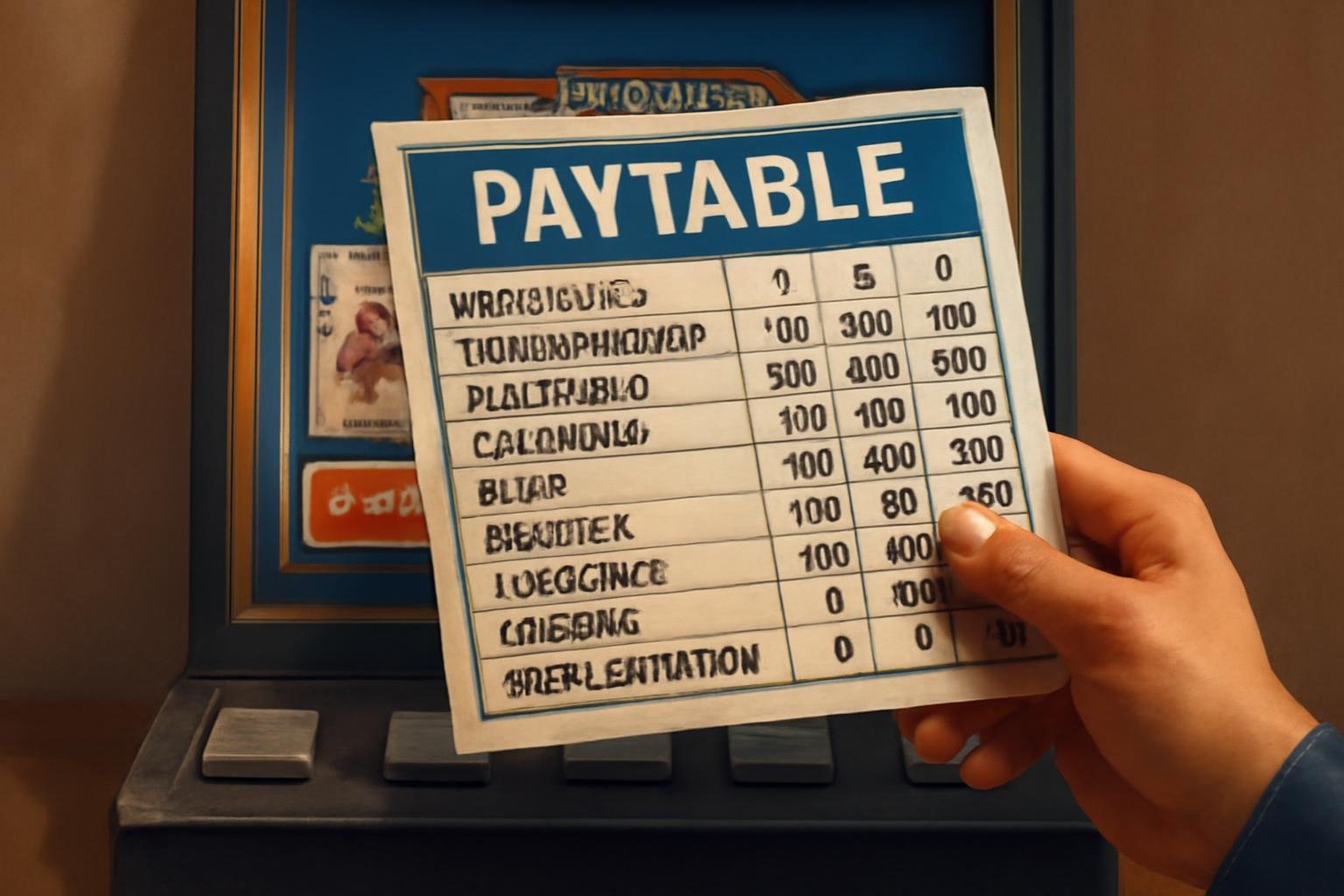


Video poker displays wagers in credits, but a session limit is easier to follow when you translate those credits into money before playing. A quick calculation can show what each hand costs, how many hands your planned budget might cover, and when to stop—without implying that a budget changes the game’s outcomes.
Convert the denomination and wager into a cash amount
Start with two details on the game screen: the value of one credit and the number of credits you intend to wager per hand. Multiply them to find the cost of a hand.
- Credit value: $0.25
- Wager: 5 credits
- Cost per hand: $0.25 × 5 = $1.25
At that setting, a $25 session limit represents 20 wagers of $1.25 if every hand costs the same amount. That is a planning estimate, not a forecast of how long the session will last or what the balance will be. Wins and losses change the available balance, and the number of hands played depends on how quickly you play.
Check the selected denomination after changing games or machine settings. The same credit count can represent a different cash wager at another denomination. If any part of the display is unclear, pause rather than guessing.
Choose a limit before you open the game
Set a maximum amount you are prepared to spend for entertainment, and use money that is not needed for essentials or obligations. Decide on the limit before play begins, rather than adjusting it in response to a losing streak or a tempting win.
For example, if your limit is $30 and each hand costs $1.50, the limit corresponds to 20 hand wagers at the starting balance. You do not have to play all 20. It simply gives you a concrete reference point. If you reach the limit sooner because the balance falls, stop; do not add money to try to get back to the starting amount.
A time limit can help too. Choose a stopping time in advance, since focusing on cards and credits can make it easy to lose track of time. Breaks are useful for checking whether you still want to continue within the limits you set.
Keep the wager steady and understand game conditions
Changing the wager mid-session makes the cash cost per hand harder to track. A simple approach is to pick a wager you can clearly afford, confirm its total cost, and keep it unchanged for the session. Avoid raising it to chase losses or treating a larger wager as a way to make a session “pay for itself.” No wager size guarantees a result.
Some games display different payouts depending on the wager, so check the rules and paytable before choosing a setting. The guide to reading a video poker paytable explains how to inspect payout rows and wager conditions. Knowing what the screen means helps you make an informed choice; it does not remove the uncertainty of play.
Use a small record to stay accountable
A brief note can make your plan easier to follow. Before starting, record the game, credit value, wager per hand, spending limit, and planned end time. Afterward, note the amount spent and whether you stopped when intended. Keep the record factual; a short session is not proof that a particular strategy works.
If you play online, keep gambling funds separate from money for bills and everyday spending. Check your account balance and payment activity rather than relying on memory. For broader reminders about staying disciplined at the table, see the role of patience in casino poker; for help thinking through transaction issues, review common casino deposit problems.
A practical pre-play checklist
- Confirm the credit denomination and calculate the cash cost of one hand.
- Set a spending limit and a stopping time before play.
- Choose a wager you can afford without increasing it to recover losses.
- Stop when either limit is reached, regardless of the balance.
The useful habit is simple: translate credits into money first, decide what you are willing to spend, and treat that amount as a firm boundary—not a target to win back.